

At the Rose Bowl Flea Market, vintage streetwear draws a crowd - Los Angeles Times |
| At the Rose Bowl Flea Market, vintage streetwear draws a crowd - Los Angeles Times Posted: 12 Sep 2019 08:00 AM PDT It was just past 8 on a cloudless mid-July morning, and the Southern California heat had already moved from balmy to oppressive. But as it was the second Sunday of the month, the Rose Bowl Flea Market was already in full swing — in fact, despite the early hour, for some, the busiest part of their day was already long over. Hiromasa Ozawa, who sells pre-owned streetwear, had been there for hours — since 4 a.m., after picking up his goods from his warehouse in Carson at 3 and driving them to the sprawling athletic stadium in Pasadena. The Rose Bowl mostly hosts college football games, but once a month it becomes Southern California's largest outdoor market, attracting 20,000 shoppers and more than 2,500 vendors. "People are out here waiting in line," Ozawa said amid racks of vintage T-shirts and jeans under a tent he had set up as a shield from the beating sun. Around him, young men scoured the racks with furrowed brows and pursed lips, hoping to find the mysterious piece they didn't yet know they were looking for. "Everyone gets here early, and they wear lights on their heads," he said, referring to the headlamps that dedicated pre-dawn shoppers use to sift through the prodigious bounty. Nearby, Souren Ohanian, 23, was looking at graphic T-shirts to purchase and then sell in his own shop, Chance Vintage, in Studio City. "I come here for inspiration," he said. "You see what people are wearing, you see what's hot, what people are displaying." Advertisement The Rose Bowl Flea Market (rosebowlstadium.com) marked its 50th anniversary last year. Founded in 1968 by Bill Thunell and R.G. Canning, the bazaar is a well known resource for vintage furniture and apparel. Many sellers specialize in pre-owned garments that could be classified as workwear — chore coats, denim, coveralls — but as the streetwear market matures, an ancillary secondhand retail opportunity has grown alongside it. Today, many shoppers who regularly frequent the streetwear-focused districts that have popped up along Fairfax and La Brea Avenues now make a monthly pilgrimage here to seek out rare or unexpected items to add to their wardrobe.  Maria Davila, right, and Ramon Lavares, both 18 and from the San Fernando Valley, shop for vintage streetwear at the Rose Bowl Flea Market last month. (Christina House / Los Angeles Times) "It's the best research point," said Sean Wotherspoon, founder of the independent chain of popular vintage clothing stores Round Two. Wearing a Public Enemy T-shirt and pushing a shopping cart stacked high with merchandise, Wotherspoon, who owns seven stores, is one of the most respected connoisseurs of the vintage streetwear scene. "This is taking time out of the month to learn, to go through vendors' booths, ask them about prices, ask them who's buying what," he said. "It's great; I'm obsessed with it." In recent years, the once-nascent streetwear scene has gone mainstream, with global luxury brands borrowing from its stylistic vernacular; it's not uncommon to see its explicit influence on runways in Milan and Paris. As the aesthetic is co-opted and corporatized, its fans are, somewhat ironically, avoiding the new and, instead, looking for rare vintage pieces to stay on the cutting edge and break free from a look that's increasingly homogenized. Advertisement Additionally, a recent interest in sustainability and eco-friendly fashion has led young shoppers to eschew restocking their closets each season and, instead, to look for rare secondhand finds that are unique and do not encourage a system of continuous (and needless) textile production. For these reasons, a slew of new online sites that specialize in pre-owned streetwear — including Grailed, GOAT and StockX, the last of which was valued at $1 billion dollars in June — have flourished in recent years.  From left, Maria Davila, Ramon Lavares, Miles Miller and Matt Vallin, all from the San Fernando Valley, sift through the"$2 pile" at the flea market. (Christina House / Los Angeles Times) What's missing from those digital forums is the social aspect of shopping that the Rose Bowl Flea Market provides. Social media has helped fuel streetwear's explosive growth, but it has also robbed it of one of its most vital aspects: community. The Rose Bowl Flea Market is an answer to that, a place where streetwear enthusiasts can meet in person, swap not just clothing but stories, and, well, just hang out. This particular Sunday morning, for example, well before most residents of the city had had their first sips of coffee, hip-hop was blaring, the aroma of marijuana drifted through the air, handshakes were exchanged, and the bonhomie was palpable. "There's the whole social aspect to it," Wotherspoon said. "You see other buyers, like you'll say, 'Oh, they're buying that? I always leave that behind. I'm gonna start buying these because someone is buying it somewhere.'" Take the trio of men holding trash bags filled with T-shirts they had acquired in a shopping frenzy that took place at dawn. Ramon Lavares, Matt Vallin, both 18, and Miles Miller, 17, had already visited the "$2 pile" — which is exactly what it sounds like. Still, they stalked new gear like a pack of wolves before the market became overrun with latecomers who had missed the day's best finds. They settled on a decidedly unglamorous pile of shirts lying on a tarp nearby, picking through as a disinterested salesperson sat on the trunk of a pickup truck a few feet away.  Collectors of vintage streetwear including Ethan Howell, center, and Dave Tu, right, hang out at the flea market. "It's one of the best communities I've been a part of," said one regular. (Christina House / Los Angeles Times) Vallin once sold clothing himself, buying shirts for $1 or $2 and flipping them for anywhere from $5 to $40 by posting them on Instagram. He's since stopped, as it was too much work to take on as a high school student, but he still comes to shop for himself and stay connected to the scene. "I think that streetwear is part of the culture now," Lavares said. "It's a way of expressing yourself, honestly. People love expressing themselves, and they find it through clothes." Advertisement "Everyone will say that they're here to sell — and I am too — but I'm also here for friendship," said Jesus Martinez, 20, of Santa Ana. "As far as selling, that's always the goal, but I want my name to be heard around here. It's one of the best communities I've been a part of." Like almost every vendor, Martinez declined to reveal where, exactly, he finds his products — he specializes in rare concert and sports T-shirts — but he did share one. "It's a secret," he said. "A lot of people won't share their spots, but I'll say the bins always hit home. The Goodwill bins, the Goodwill outlets. There's one in every county — San Diego County, Orange County. There's one in San Bernardino … they're the golden spot." These sorts of hunts can yield big profits. Tristan Ferguson, 21, found a 30-year-old Keith Haring shirt while thrifting on the East Coast and sold it for $200 at the Rose Bowl. "It was from '88," he said. "The whole idea of the shirt was … it was explaining white Americans but it says: 'I used to be a white American but I gave it up for the interest in humanity.' And that's just so relevant today," he said. Ferguson, who is from San Diego, has been selling at the Rose Bowl Flea for about a year and sells at the Pasadena City College Flea Market as well. As this vintage scene has grown, luxury brands have taken note. In the same way they appropriated the streetwear look, they're now cannily imitating the secondhand look.  The growth of the vintage streetwear market, especially among younger shoppers, parallels the rise of sustainable fashion. (Christina House / Los Angeles Times) "What's funny to me is that designer brands look at things like this, the fading, and they'll re-create it," Martinez said. "Like Balenciaga made a fake band called the Speedhunters, but it was riffing off the 1998 world tour shirt from the Backstreet Boys. They just re-create what they've seen before." Ohanian, of Chance Vintage, agreed. "One thing that's really, really big right now is the vintage look, more than actual vintage items," he said. "Fashion companies are trying to replicate the look. High-end designers are sampling from vintage, and also a lot of New Wave designers. Barneys carries a lot of them. If you walk in there you might think, 'Oh, this is secondhand.' But it's not, it's referencing secondhand style." As a salesman himself, he has ideas as to why this look resonates: "What seals the deal with a customer is nostalgia," he said. "They just want to be able to relate to their past, whether it be an old sports team that doesn't exist anymore or an old cartoon they used to watch." Advertisement However, Ohanian concedes that not everyone is seduced by their memories. "A lot of people just want what's hot." The next Rose Bowl Flea Market is Oct. 13. Admission from 5 to 7 a.m. is $25, then $18 from 7 to 8 a.m., $14 from 8 to 9 a.m and $9 after 9 a.m. Children younger than 12 are admitted free with an adult. 1001 Rose Bowl Drive, Pasadena; rosebowlstadium.com.  |
| Recent UNL graduate finds success with vintage Husker clothing line - Daily Nebraskan Posted: 12 Sep 2019 10:45 PM PDT 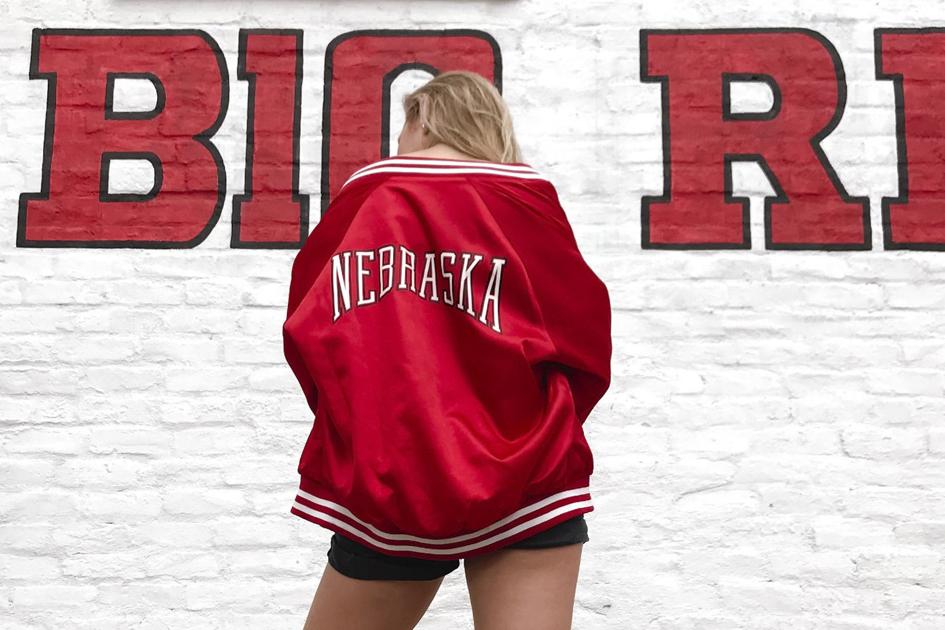 Driven by her passion for fashion and hard work, University of Nebraska-Lincoln alumna, Allison Wetig, opened a traveling pop-up shop to sell exclusive and vintage Husker apparel. Wetig graduated from UNL in May of 2019 with a pair of bachelor's degrees in advertising & public relations and graphic design. Wetig's courageous and curious personality has helped her achieve many successful goals. She has dedication to working and creating great experiences in the world of fashion, such as her work at beyourself boutique as a marketing manager, designing weekly shirts at Barry's Bar and Grill and her pop-ups. Her sense of fashion formed when she was in high school at Millard North in Omaha. Wetig bought high-waisted denim jeans from thrift stores and cut them into shorts. After turning enough heads with her frayed statement pieces, she started receiving custom requests from people to sell them wholesale to a vintage shop in Benson called Lion's Mane — formerly known as Paper Doll. After graduating from UNL, she realized she accumulated too much clothes throughout high school and college, so her abundant wardrobe would not fit in her new studio apartment. Subsequently, she decided to have a sale in her dad's garage in October 2018. "The garage sale was super successful," Wetig said. "I was shocked how many people showed up and how much I made." Rolling off the positive results, Wetig and a friend had another clothing sale in April 2019 at her apartment. Her second sale was just as successful as the first, according to Wetig, as the customers swarmed her apartment. "It was insane," she said. "People were waiting at my apartment when the doors opened." Other than selling thrifted clothes at her apartment and garage sales, Wetig also sold Husker apparel. According to Wetig, the sales of Husker merch were a smashing success. Wetig realized the Husker merchandise piqued the most customer interest and sold quicker than the other clothing. "I was like — 'wait, the things that have made me the most money and exposure were Husker Gamedays, Barry's t-shirts and clothing pop-ups,'" Wetig said. "'I just needed to combine these concepts.'" The successful garage sale was the beginning of a new passion for her. Wetig started thrifting, ordering online and going to warehouses in order to accumulate Husker clothing from all over Nebraska. "I knew I would actually have time to pull off gathering hundreds of items for the first Husker pop-up," she said. She sells all types of clothing — tanks, t-shirts, long sleeves, crewnecks, sweatshirts, quarter zips, hoodies, jackets, windbreakers and pattern-printed pants. She washes, dries, inspects the clothes for damage and tags them all by herself. Due to the steps of ensuring quality clothing, Wetig said she is very reasonable and fair with pricing for her target audience of college students. "I want to provide them with great clothing, but at a fair price," she said. Wetig sells the products on an application called Depop in-between the pop-ups. According to her, the application is a better way to sell online because it is more affordable and profitable for her. "Every single person [on the app] is a potential customer looking to buy stuff from you," she said. "So people can come across you so much better." Although Wetig likes the process of selling online, she loves meeting customers in person. The pop-ups allow customers to physically see the clothes and try them on. At her first pop-up at Drips Coffee, she had more than three hundred items and had spent thousands of dollars to invest in her small business. Now, with future pop-ups planned for the Friday before each game, she hopes that the results can pay off and reward her for the money and energy that she put into it. Brad Horky is an old coworker of Wetig's from her days designing shirts at Barry's. He helps her to obtain and resell vintage Husker items. "It's amazing the market for any Nebraska items and clothing that has any age to it at all," he said. "Allison has hit on something there and will do well." Wetig doesn't reveal where she finds all her vintage Husker apparel, but she said she has a few sellers — friends that help her to find the most exclusive pieces. "I don't really want to reveal all my secrets, otherwise I don't have a business," she said. She also repurposes pieces by cutting them into crops, adding flannel to the sleeves and adhering patches to a denim jacket in order to the items become more authentic. "When I'm looking for Husker apparel I am really focused on unique items," she said. According to Wetig, it's hard work to find enough of those exciting pieces for the pop-up. Despite this, she wants to keep growing and having the pop-ups as long as she has merchandise. "I would absolutely love to keep having pop-ups. I want to have enough of them to maximize my profits, but find a balance so I don't overwhelm and bore customers."  |
| You are subscribed to email updates from "vintage clothing" - Google News. To stop receiving these emails, you may unsubscribe now. | Email delivery powered by Google |
| Google, 1600 Amphitheatre Parkway, Mountain View, CA 94043, United States | |





0 Yorumlar