


“Tora! Tora! Tora!” is the epic retelling of the attack on Pearl Harbor told from both points of view. It is from the war epic genre that includes The Longest Day, A Bridge Too Far, and Midway . It fits comfortably in that group, but differs from them because it is less character driven. Of the group it has the most documentary feel and the most fidelity to historical accuracy. It also does not have an all-star cast.
TTT was released in 1970. It was a joint American-Japanese project with separate directors and production. The two separate “films” were then intertwined to create the finisled product. The movie bounces back and forth between the opposing sides seamlessly. The screenplay was written by two Japanese and an American, The screenplay was based on the eponymous nonfiction book by Gordan Prange and “The Broken Seal” by Ladislas Farago. Prange vetted the script. There were numerous technical advisors including Japanese who participated in the attack. TTT strives for authenticity, sometimes at the expense of entertainment. The Japanese dialogue is subtitled which is helpful in understanding the Japanese psyche.
The early part of the film details events leading up to the attack. It is an excellent tutorial on the political and strategic machinations prior to the attack. One flaw is the lack of a clear time line for events before Dec. 6. The movie offers a brass-eye view from the governmental and military levels. The main American characters are Gen. Short (Jason Robards) and Adm. Kimmel (Martin Balsam). We also get a large dose of Yamamoto, Hull, Stimson, and Nomura. The movie forgoes the grunt level characters like Duhon (A Bridge Too Far) or Garth (Midway). There are no major fictional characters.
TTT fits in all the “greatest hits” of the Pearl Harbor story. These include: the code-breaking effort, the radar pick-up, Taylor and Welch in their P-40s, the U.S.S. Ward versus the Jap sub, Dorie Miller, the Hull-Nomura interchanges. Any fan of the battle will not be disappointed. Fans of faux dramatics will be. This movie is very different from “Pearl Harbor” in that respect.
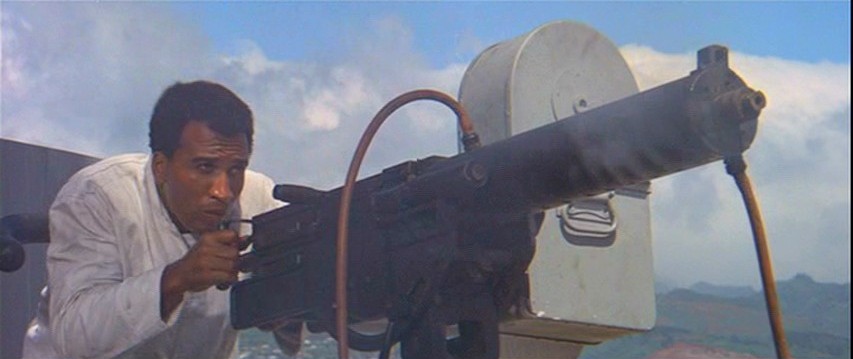 , , |
| Dorie Miller |
The attack is spectacularly done. It features real planes. B-17s and P-40s were available and American planes like T-6s were mocked up to play Zeros. The stunt flying is well done. The dog- fighting acrobatics are commendable, but you do get the fake looking shots from the front typical for air combat scenes from that era. The attack on Hickam Air Field is noteworthy as is the explosion of the Arizona. There are plenty of explosions in this movie, but that is appropriate of course. The movie won the Academy Award for Best Special Effects. It was a s good as you could get pre-CGI.
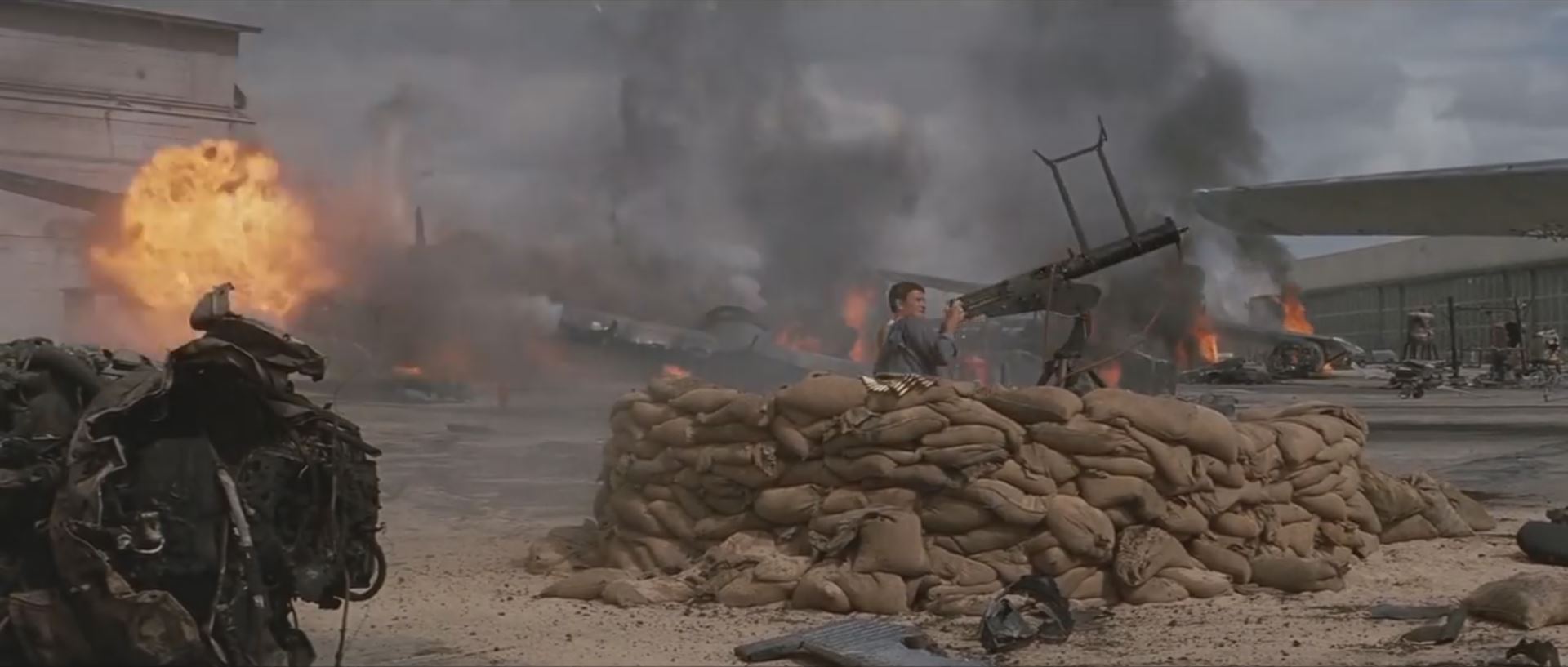 |
| the attack on Hickam Field |
TTT resembles "The Longest Day" in its impartial treatment of both sides. In fact, it could be argued it may be a bit too sympathetic to the Japanese. The movie was a bigger hit in Japan than in the U.S. (where it bombed). Contrast that with “Pearl Harbor”. Another key theme is the rehabilitation of the reputations of Short and Kimmel who were made scapegoats in the aftermath of the disaster. The movie makes a strong case for complacency being the major flaw of the American leadership. not malfeasance. That plus the incredible luck the Japanese had.
The obvious comparison is to “Pearl Harbor” and whichever one you prefer tells a lot about you as a viewer. If you are like me and prefer accuracy at the expense of entertainment, you would pick TTT. I have to say that most of my students would prefer the more splashy (and pompous) PH and would find TTT boring, especially in the lead-up to the attack. The best thing to do is to watch them as companion pieces. You can avoid reading up on the attack if you take that approach.





0 Yorumlar